
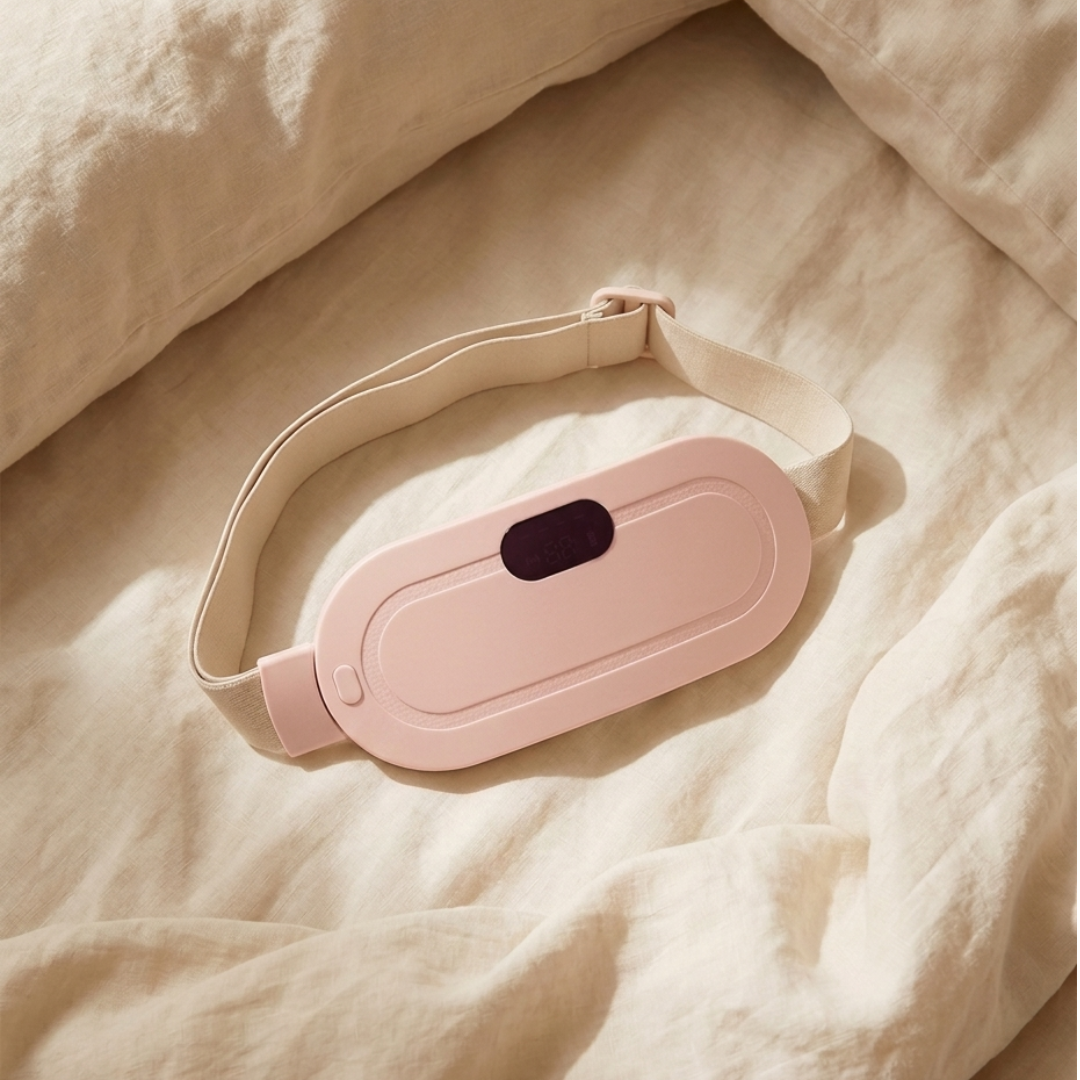
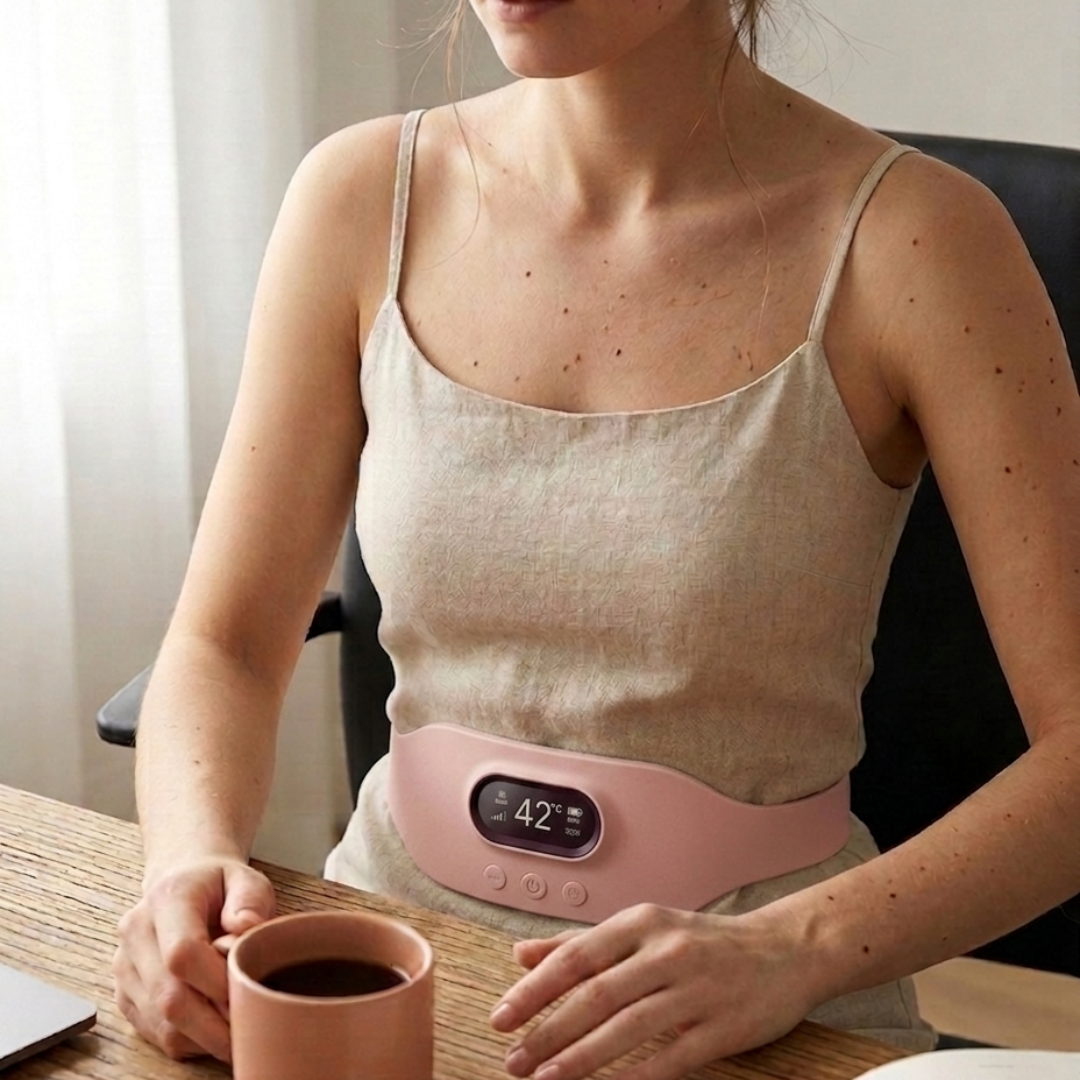
Built for the way cramps actually work.
Continuous therapeutic heat. Calibrated vibration. Two physiological angles attacking the cramp at once — without pills, without patches, without the heating pad that quits at hour two.

If you've ever spent Day One on the bathroom floor — this isn't a trend.
You've tried the heating pad that goes cold at hour two. The patches that itch and don't last past lunch. The painkillers that strain your stomach if you take them often enough to actually help.
You've probably tried the popular wearable too — the one whose company stopped responding to your emails when it broke after six weeks.
None of it worked all the way for one reason: period cramps aren't one problem. They're three, happening at once. Most products fight one. peryode addresses all three.
That's why nothing's worked all the way.
And why this finally does.
The DualWave Relief System.
Cramps need more than one fix. peryode delivers both at once — the muscle, the vessel, and the nerve gate, in a single 4mm wearable.
ThermoWave
Continuous therapeutic heat at 38–45°C via PTC ceramic. Reopens the constricted vessels that prostaglandins clamp shut, restoring oxygen flow to the uterine muscle. Self-regulating. No overheating, no cool-downs at hour two.
NeuroWave
Calibrated vibration engages the gate-control mechanism in the spinal cord — dampening the pain signal before it reaches the brain. Three intensity levels, two pulse patterns. For the days when heat alone isn't enough.
Heat reopens the vessels.
Vibration closes the gate.
Together. Continuously. For five hours straight.
Three ways to start. Pick yours.
Every kit ships in molded recycled paper pulp. No plastic, no air-filled wasted space, no marketing leaflets.
Starter
Just the belt. Nothing extra.
- DualWave Relief Belt
- Braided USB-C charging cable

Relief Kit
Travel-ready. Day-bag ready.
- DualWave Relief Belt
- Braided USB-C charging cable
- Premium Carrying Case

Complete Protocol
For the headache that comes with it.
- DualWave Relief Belt
- Braided USB-C charging cable
- Premium Carrying Case
- Eye Heating Massager
Engineered for Day One — and every cycle after.
Therapeutic temp from cold start
Single charge on heat-only mode
Profile · discreet under any clothing
Refund promise · one email, no return shipping
From box to relief in under twelve minutes.
No gel. No spray. No app required. Plug in, wrap on, click on.
Charge for two hours.
USB-C into any phone charger. Single charge runs 5h 07m on heat-only mode — about a full Day One.
Wrap, fasten, click on.
Adjustable strap fits 24–46 inch waists. 4mm profile wears flat under any shirt or dress.
38°C in ninety-one seconds.
Step up to 45°C. Add NeuroWave vibration on hard days. Walk around. Forget you have it on.
Why the alternatives fight half the battle.
| Heating Pad | Heat Patches | Ibuprofen | TENS Device | peryode | |
|---|---|---|---|---|---|
| Holds 38–45°C continuous | — | ~30 min | N/A | No heat | 5h 07m |
| Restores blood flow | Partial | Partial | — | — | ✓ |
| Dampens pain signal | — | — | Indirect | ✓ | ✓ |
| Wearable to work | — | ✓ | N/A | ✓ | ✓ |
| Side effects | None | Skin irritation | GI / kidney load | None | None |
| Cost over 2 years | £25 | £190 | £80 + risk | £119+ | £74.99 once |

I built peryode because nothing on the shelf actually worked for me.
I tried the heating pad. The patches. More ibuprofen than I should have, for too many years. The popular wearable that stopped working after six weeks while the company stopped responding to my emails.
The science showed me what was happening. Period cramps aren't just muscle contractions. Prostaglandin F2-alpha forces uterine hypercontraction and constricts the vessels feeding oxygen to the muscle. Nothing I owned addressed both at once.
So I worked with engineers and clinical advisors to build the wearable that did. Continuous therapeutic heat. Calibrated vibration that closes the gate on the pain signal at the spinal cord. Two mechanisms. One belt. Built once, kept for years.
We don't take subscriptions. We don't lock you into refills. If it doesn't work for you, one email gets your money back in 48 hours. No return shipping. We mean it because the women who came before you were owed it.
Sixty days. One email.
We mean it.
Test it for two full cycles. If it doesn't work for you, the next steps belong to you. No fine print, no return shipping, no follow-up calls.
One email.
No forms, no questionnaires, no "please give it one more month." Reply to your order or write hello@peryode.com.
48-hour refund.
Money back to the original payment method within 48 business hours. No "please allow 5–10 business days."
No return shipping.
Keep the belt. Donate it, gift it, or recycle it. We don't pay you to mail back a used wearable.
Questions women have actually asked us.
Will this work if I've tried four other things?
How discreet is it really?
£74.99 feels expensive. Is it worth it?
How long does the battery actually last?
How does the 60-Day Relief Promise actually work?
Your pain is real.
The biology is real.
Now there's a wearable built for the way it works.
Free UK shipping over £69. 60-Day Relief Promise. No subscription required.
Choose your kit